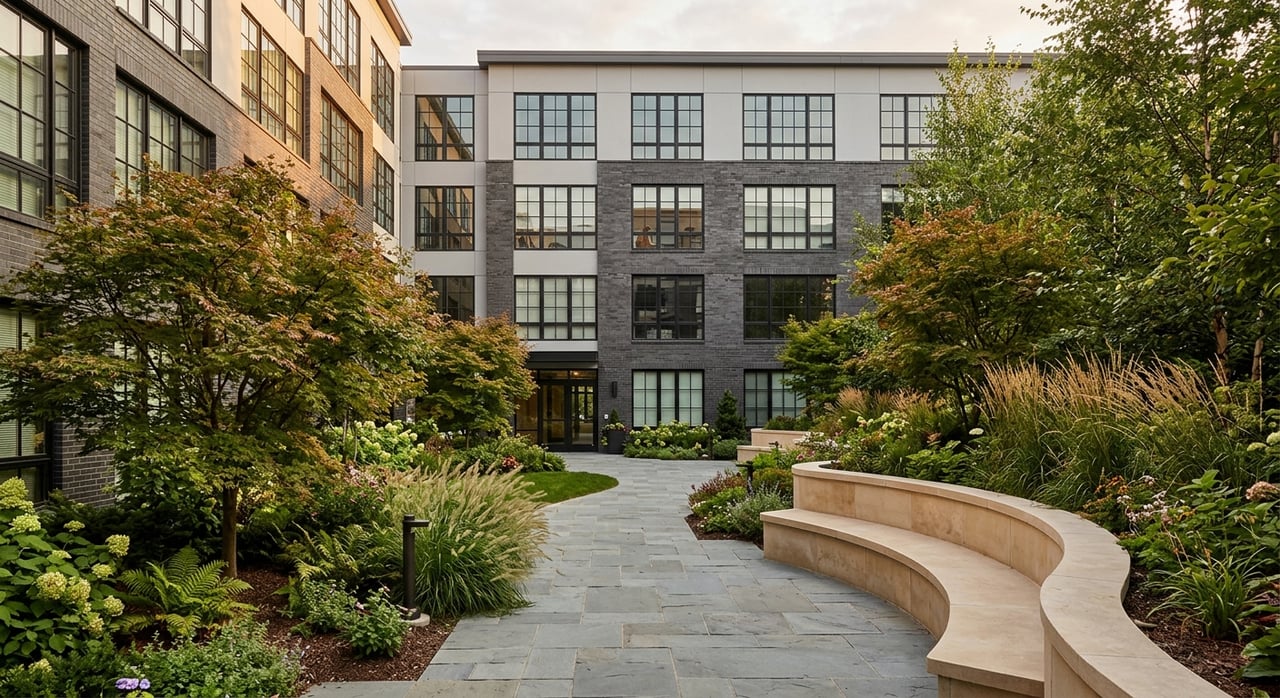
If you want more space without giving up your connection to New York City, Hudson Harbor often lands on the short list for good reason. Many relocating buyers are looking for that hard-to-find mix of train access, walkability, and a home that feels calmer than Manhattan or Brooklyn. In Hudson Harbor, you can explore a waterfront setting tied closely to downtown Tarrytown rather than a detached suburban pocket. Let’s dive in.
Why Hudson Harbor stands out
Hudson Harbor is part of Tarrytown’s waterfront and downtown edge, not a separate world unto itself. A New York State Downtown Revitalization Initiative document describes it as a condominium and townhouse community with 238 units in the area north of West Main Street near RiverWalk Park. That matters because when you buy here, you are also buying into how the waterfront, the station, and downtown Tarrytown work together.
Tarrytown sits about 25 miles north of Midtown Manhattan on the eastern bank of the Hudson River. For many NYC buyers, that location hits a sweet spot. You are far enough away to gain breathing room, but still close enough to keep the city in reach.
Commute access for NYC buyers
For relocation buyers, the commute question usually comes first. Hudson Harbor’s materials say the residences are within walking distance of the Tarrytown Train Station and cite access to Grand Central at about 36 minutes. Exact trip times can vary by train and schedule, so it is smart to confirm timing before you make a decision.
That station access is one of the biggest reasons Hudson Harbor appeals to city buyers. Instead of planning your day around a long drive, you can test a routine that feels more connected to rail travel and village life. For many buyers, that is a major lifestyle upgrade.
Walkability in Tarrytown
Tarrytown describes downtown as an easy walk up a hill from the train station. The village also promotes Main Street as a destination for dining, shopping, entertainment, and events. If you are moving from the city, that kind of everyday convenience can make a big difference in how quickly a place feels like home.
The village also notes that you can rent an e-bike or take a taxi from the station. So while Hudson Harbor supports a walkable routine, it is best understood as car-light rather than fully car-free. You may still want a car for certain errands or regional travel, but daily life does not have to revolve around one.
Waterfront living with built-in recreation
One of the clearest differences between Hudson Harbor and a typical suburban neighborhood is the waterfront experience. Scenic Hudson’s RiverWalk park at 250 W. Main St. is a 5.2-acre public waterfront park with opportunities for biking, dog walking, fishing, and picnicking. The village also maintains RiverWalk Park and kayak launch and storage racks on Green Street.
There is also a RiverWalk Connection Project designed to improve the link under the Governor Mario Cuomo Bridge and toward the Metro-North station. For buyers who want outdoor access woven into daily life, that public riverfront network is a meaningful part of the appeal. It helps make the neighborhood feel active and connected rather than isolated.
Amenities that change daily life
Hudson Harbor’s official site describes The Lodge as the center of recreation. It is a 12,000-square-foot facility with an outdoor pool, fitness center, and yoga studio. The amenities pages also reference concierge services, a resident lounge or clubroom, restaurants, retail, Riverwalk Park, and a fully walkable community.
For many NYC buyers, this creates a lifestyle that feels familiar in some ways and very different in others. You still have convenience and shared amenities, but you also gain a riverfront setting and a different pace. That combination is a big part of why Hudson Harbor tends to attract relocators who want more room without giving up structure and ease.
What types of homes are in Hudson Harbor?
Hudson Harbor should not be described as one single housing type. State materials identify it as a condo and townhouse community, and the community’s own materials refer to both townhomes and residences. That mix gives buyers more than one way to approach the move from NYC.
Some homes lean toward townhouse-style living, with an emphasis on private outdoor space such as a patio, balcony, or roof deck. Others offer more of a residence-style or condominium feel. In practice, that means two homes in Hudson Harbor can deliver very different experiences even when they share the same broader address.
How Hudson Harbor compares to city living
If you are relocating from Manhattan or Brooklyn, square footage is only part of the equation. Buyers often compare Hudson Harbor based on a broader lifestyle tradeoff: private space, water views, parking, and amenity maintenance versus the density and constant motion of city neighborhoods. That is usually a more helpful way to evaluate the move.
In Hudson Harbor, the setting can feel like a more spacious version of urban living. You still have proximity to transit, restaurants, and shared amenities, but with less dependence on street-level density. For many buyers, that balance is exactly the point.
What to check before you buy
Because Hudson Harbor includes different building types and amenity setups, it is worth looking closely at the details of each option. The community label alone will not tell you everything you need to know. Small differences can shape your day-to-day experience in a big way.
Here are a few practical items to confirm as you compare homes:
- HOA or condo fees
- Parking arrangements
- Whether the building has elevator service
- Whether the building has doorman service
- How the home’s exposure affects views
- How the home’s exposure affects natural light
- How the home’s exposure affects wind off the river
These are the kinds of factors that can matter more than a polished listing description. A townhouse-style home with private outdoor space may fit one buyer perfectly, while a residence-style home with easier shared access may suit another better.
Plan your visit like a local
If you are serious about Hudson Harbor, one quick showing is usually not enough. A better approach is to visit once during a weekday commute window and once on a weekend. That gives you a more complete sense of how the neighborhood actually functions.
On a weekday, test the walk to the station, the timing of the train, and the walk up into downtown Tarrytown. On a weekend, spend time along the waterfront, explore Main Street, and see how the neighborhood feels when rush hour is not driving the pace. This two-part visit often tells buyers more than any brochure can.
Financing questions waterfront buyers should ask
Budget planning matters in any purchase, but it is especially important when you are comparing amenity-rich homes. As you prepare, it can help to get multiple preapprovals and compare loan options carefully so you understand both your budget and your monthly costs. That becomes even more useful when fees, parking, and building services vary from property to property.
If you are focused on waterfront living, be sure to ask detailed insurance questions too. Homeowners insurance does not always cover flood damage, so buyers should ask whether separate flood coverage may apply to a specific property. That is a smart conversation to have early, not after you are already emotionally committed.
Is Hudson Harbor right for your move?
Hudson Harbor tends to work best for buyers who want a smoother transition from city living rather than a complete lifestyle reset. You can still keep a train-centered routine, walk to parts of daily life, and enjoy restaurants and public outdoor space nearby. At the same time, you may gain more private space, water views, and access to amenities that are hard to replicate in the city.
The key is knowing that not every Hudson Harbor home lives the same way. The right fit depends on how you weigh commute time, housing style, outdoor space, parking, fees, and building services. Working through those details carefully can help you choose not just the right address, but the right version of waterfront living in Tarrytown.
If you are planning a move from NYC and want a local perspective on how Hudson Harbor fits into the broader Tarrytown market, Karen Stroub & Elvira Aloia can help you compare options and narrow in on the homes that truly match your lifestyle.
FAQs
How long is the commute from Hudson Harbor to Grand Central?
- Hudson Harbor’s materials say access to Grand Central is about 36 minutes from the nearby Tarrytown Train Station, but exact travel time depends on the train and schedule.
Is Hudson Harbor in Tarrytown walkable without a car?
- Hudson Harbor is walkable to the train station and connected to downtown Tarrytown, but it is best described as car-light rather than completely car-free.
What types of homes are available in Hudson Harbor Tarrytown?
- Hudson Harbor includes a mix of condominiums and townhouses, with some homes offering townhouse-style layouts and private outdoor space.
What amenities are available at Hudson Harbor?
- The community’s official materials describe The Lodge, which includes an outdoor pool, fitness center, and yoga studio, along with concierge services, a resident lounge or clubroom, restaurants, and retail.
What should NYC buyers check before buying in Hudson Harbor?
- Buyers should confirm fees, parking, elevator or doorman services if relevant, and how a specific home’s exposure affects light, views, and wind off the river.
