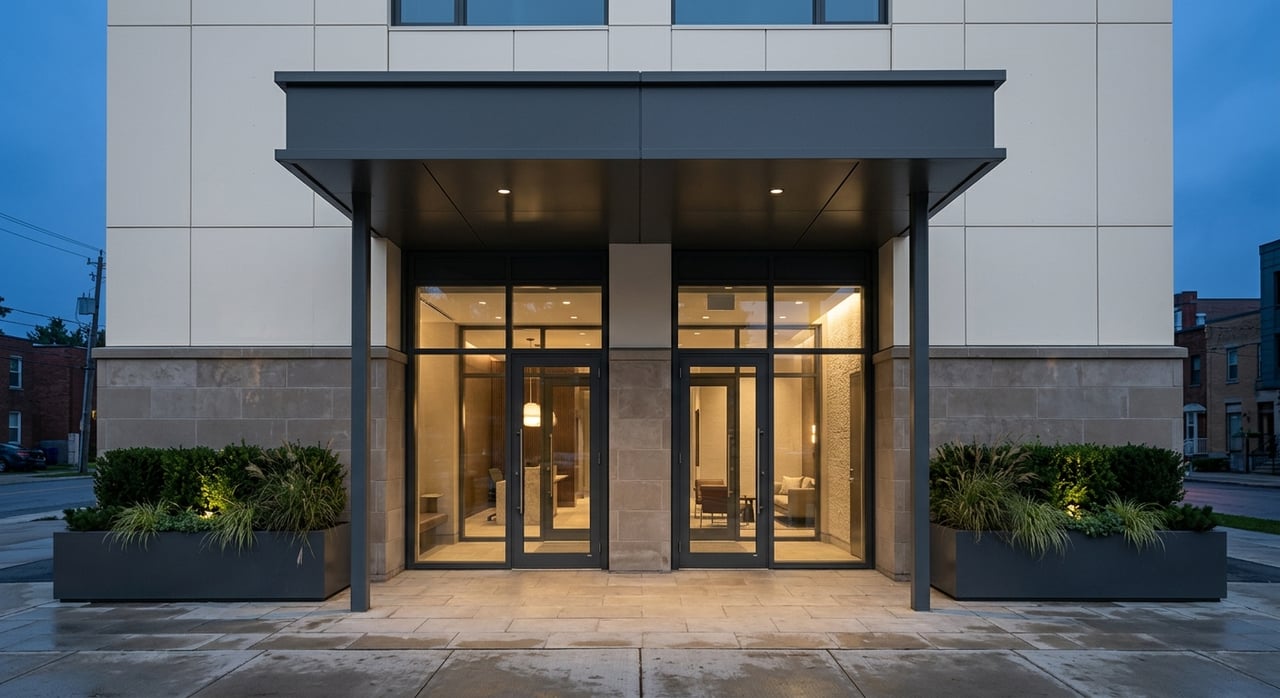
If you are thinking about buying at The River House, you are probably asking a smart question: will this home hold value over time? In a waterfront building with strong amenities, a commuter-friendly location, and limited inventory, that is exactly the right lens to use. The good news is that public data points to real long-term appeal, but the investment story here is more nuanced than a simple cash-flow play. Let’s dive in.
Why The River House Stands Out
The River House at Hudson Harbor is a 2015, four-story, 56-unit waterfront condominium at 11 River Street in Sleepy Hollow. Public listings consistently highlight features that matter to long-term owners and future buyers, including concierge or door-person service, elevator access, a fitness center, a pool or lap pool, outdoor terrace space with grills and a fire pit, garage parking, and access to The Lodge clubhouse.
That amenity package matters because it helps support demand over time. In buildings like this, buyers are not just purchasing square footage. You are also buying convenience, lifestyle, and a level of daily ease that can help a property stay competitive when the market shifts.
Location adds another layer to the value story. Public listings place The River House within walking distance of Tarrytown Station and the Hudson RiverWalk, with commute times to Grand Central commonly described in the mid-30-minute range. For many buyers, that mix of waterfront setting and rail access is hard to replace.
Long-Term Investment Means More Than Appreciation
When people talk about real estate investing, they often focus only on resale price. At The River House, the long-term picture is broader. You should think about appreciation potential, resale demand, carrying costs, and how easy the property may be to enjoy yourself or rent on a conventional lease.
This is especially important in a building where unit pricing can vary widely. Public examples include a one-bedroom sale at $746,000, a two-bedroom sale at $825,000, another two-bedroom sale at $1.1 million, and a current three-bedroom listing at $1.499 million. That spread tells you value is highly unit-specific, so your floor, view, layout, outdoor space, and finish level can all affect performance.
What 10591 Market Trends Suggest
The broader 10591 market has shown solid recent appreciation. Zillow reports an average home value of $908,818, up 8.3% year over year as of March 31, 2026. Redfin reports a March 2026 median sale price of $913,000, up 10.6% year over year, and characterizes 10591 as a seller’s market.
That backdrop matters if you are buying for the long run. In a market with upward price movement and limited leverage for buyers, well-located condo inventory can benefit from broader demand. It does not guarantee future appreciation, but it does support the case for Sleepy Hollow and Tarrytown-area ownership as a long-term hold.
River House Resales Show Real Strength
Public resale history at The River House offers encouraging signs. Unit 203 rose from $499,000 in 2016 to $695,000 in 2024, which is about 39% appreciation. Unit 214 rose from $697,780 in 2016 to $825,000 in 2025, or about 18%.
Another example is unit 206, which sold for $1.2 million in 2020 and now shows a Zillow Zestimate of $1.5525 million, roughly 29% higher. While each unit is different and timing always matters, these examples suggest the building has generally performed well relative to the local market.
That said, it is important to stay realistic. Appreciation in any condo building is not perfectly linear. Unit type, market timing, interior upgrades, and overall inventory conditions can all shape your eventual return.
Amenities Can Support Future Demand
One of the strongest arguments for owning at The River House is the amenity stack. In many condo buildings, amenities are nice to have. Here, they are part of the core value proposition.
Features like concierge service, garage parking, pool access, a fitness center, outdoor entertaining areas, and clubhouse access can widen the pool of future buyers and renters. They also help the building compete with newer product in the area because the lifestyle offering feels complete.
There is also evidence that some amenities may sit outside standard HOA dues. A recent listing noted that membership to The Lodge was available for $500 per year. That is worth reviewing carefully when you underwrite the total cost of ownership, since it may be an added annual expense rather than a fully bundled feature.
The Carrying Costs Are Important
If you are evaluating The River House as an investment, carrying costs deserve close attention. Public records show HOA dues ranging from about $490.68 per month on a one-bedroom to $786.60 per month on a recently sold two-bedroom and $1,208 per month on a current three-bedroom listing. Another Zillow page showed $572 per month for a two-bedroom.
Those dues appear to support a meaningful list of services, including common-area and exterior maintenance, grounds care, pool service, snow removal, trash, concierge, fitness center, parking, security, receiving room, and roof-deck access. That can be a positive from a lifestyle and resale standpoint, but it also affects your monthly ownership costs.
Property taxes vary widely too. Public examples show $13,541 in 2025 taxes on a recent one-bedroom sale, $11,533 after STAR on another one-bedroom, $20,924 in 2025 taxes on a two-bedroom, and $28,117 on a current three-bedroom listing. Before you buy, you want a clear, unit-level picture of taxes, HOA dues, and any optional amenity fees.
This Is Not a Pure Cash-Flow Play
If your goal is maximum monthly cash flow, The River House may not be the best fit. Public rental examples suggest the building performs more like a premium long-term hold than a high-yield investment property.
Recent rental listings point to conventional lease demand, with examples around $3,500 per month for a one-bedroom or one-bedroom-plus-den, about $4,000 per month for another one-bedroom, about $6,700 per month for a two-bedroom, and a separate three-bedroom listing history showing a $12,500 per month ask in 2025. Those are meaningful rents, but they sit alongside equally meaningful carrying costs.
The public data suggests this building works best for someone who values location, amenities, and relative scarcity. As one rough illustration from the available numbers, a one-bedroom with $13,541 in annual taxes and $490.68 monthly HOA dues would use about 40% of a $4,000 monthly gross rent before mortgage, insurance, and repairs. That is not a full underwriting, but it helps show why this is better viewed as a long-term asset than a quick cash-flow vehicle.
Rental Strategy Should Focus on Long-Term Leasing
If you are considering renting out your unit, the safer assumption is a conventional long-term lease. Public River House rental examples point to standard lease structures, including a 12-month lease option shown on Apartments.com.
Short-term rental plans should be treated very carefully. The New York State Department of State notes that municipalities use different approaches to permit or restrict short-term rentals. In Sleepy Hollow, New York Tax Law authorizes the village to impose a hotel or motel tax of up to 3% on rooms rented on a daily or longer basis.
That does not automatically tell you what is allowed in the building itself. It does mean any Airbnb-style strategy requires a fresh review of local rules and the condo’s governing documents before you make assumptions.
A Positive Sign on Building Upkeep
One detail that may give buyers added confidence is recent capital work. A listing for unit 214 stated that the building had a 2024 facade, window, and door renovation that was fully paid for, with no current assessments at that time.
That does not remove all future building expenses, of course. But it can reduce concern about immediate surprise capital calls and suggests attention has been paid to the building envelope. For long-term owners, that kind of maintenance history matters.
Who The River House Fits Best
The River House can make a lot of sense if you want a primary residence that also has long-term value potential. It can also appeal if you are looking for a second home with the option for conventional leasing later. In both cases, the investment logic is tied to quality of life, limited waterfront condo supply, and the building’s lasting buyer appeal.
It may be less compelling if your top priority is short-term rental flexibility or strong immediate cash yield. In that case, the combination of taxes, HOA dues, and building-specific rules may not line up with your goals.
How to Evaluate a Unit Smartly
Not every River House unit offers the same long-term upside. Before you buy, it helps to compare each opportunity through a few practical lenses:
- Layout and bedroom count
- Floor level and exposure
- Water views or terrace access
- HOA dues and tax burden
- Recent upgrades and condition
- Rental history and lease potential
- Any optional fees tied to amenities like The Lodge
In a building where prices and costs vary meaningfully, the right unit selection can have a major impact on both enjoyment and long-term performance.
Owning at The River House can be a smart long-term move if you are buying with a clear understanding of what drives value here. This is a building where lifestyle, location, and scarcity appear to matter as much as spreadsheets. If you want help comparing specific units, understanding carrying costs, or weighing ownership against rental potential in Sleepy Hollow, the local insight of Karen Stroub & Elvira Aloia can help you make a more confident decision.
FAQs
Is The River House in Sleepy Hollow a good long-term investment?
- Public data suggests it can be a strong long-term hold for buyers who value waterfront location, amenities, and resale appeal, but it appears better suited to appreciation and lifestyle value than pure monthly cash flow.
Can you rent out a condo at The River House?
- Public rental examples show conventional long-term leasing activity at The River House, including 12-month lease offerings, so long-term rentals appear to be the more supportable strategy based on available evidence.
Are short-term rentals allowed at The River House in Sleepy Hollow?
- Short-term rental plans should be treated as a compliance question, since New York municipalities use different rules and Sleepy Hollow can impose a hotel or motel tax on certain stays, so buyers should review local rules and condo documents before assuming this use is permitted.
What are HOA fees like at The River House?
- Public records show HOA dues ranging from about $490.68 per month on some one-bedroom units to $1,208 per month on a current three-bedroom listing, with services that may include maintenance, concierge, pool access, parking, security, and more.
What property taxes should you expect at The River House?
- Public examples vary widely by unit, with recent listings and sales showing taxes from about $11,533 after STAR on one one-bedroom to $28,117 on a current three-bedroom listing.
What makes one River House unit a better investment than another?
- Unit-specific factors like layout, views, outdoor space, condition, floor level, HOA dues, taxes, and rental potential can all influence long-term value, so each condo should be evaluated on its own merits.
